
Knowledge Base
A public hub for OpsKitPro tool notes, operations guides, and implementation records.
Only cleaned, reusable public content lives here; private drafts stay outside the site build.
Start here
Start with OpsKitPro's product context, diagnostic entry point, and evidence-based report model.
Website diagnostics
Turns DNS, HTTP, TLS, CDN, and security header signals into actionable evidence.
Network Doctor
Separates Your Device, Cloudflare Edge, and OpsKitPro Probe so network metrics do not overclaim.
Cloudflare to Lightsail
Clarifies the current production path: Cloudflare remains the edge while Wrangler/Worker runtime is retired.
API and automation
Turns web diagnostics into public interfaces for scripts, CI, and agent workflows.
AI engineering
Turns vibe coding into a guarded workflow with scope, verification, notes, and deployment checks.
Utility workbenches
High-frequency JSON, WebSocket, password, and QR tools built for fast, predictable use.
Product building
Notes on why OpsKitPro is designed, scoped, and simplified this way.
Start here
Start with OpsKitPro's product context, diagnostic entry point, and evidence-based report model.
Why I built OpsKitPro: from troubleshooting pain points to a tool platform
Bring DNS, IP, website checks, SSL, CDN, and WebSocket into one place to cut switching cost.
OpsKitPro: Online Website, DNS, IP and Network Diagnostic Tools for Developers
From website status and network connectivity to our Public JSON API, see how OpsKitPro helps you troubleshoot faster.
Website Diagnostic Reports: turn DNS, SSL, CDN, and HTTP checks into an SRE action plan
OpsKitPro Website Check now turns raw DNS, SSL, CDN, security header, and HTTP probe data into a practical diagnostic report with likely causes and verification steps.
Website diagnostics
Turns DNS, HTTP, TLS, CDN, and security header signals into actionable evidence.
Diagnostic Tools Should Show Evidence, Not Just Scores
A diagnostic score is only useful when it points back to the observation point, raw evidence, finding, limitation, and verification steps behind it.
How the website-check module works: a breakdown of the implementation
Target normalization, parallel probes, partial-success fallback, and summary-first UX are the core of the checker.
Your HTTPS is Working, But Is Your TLS Configuration Actually Healthy?
Why a successful connection in the browser doesn't guarantee a secure TLS configuration, and how to verify exact hostname matching, legacy protocol exposure, and CDN edge termination.
Cloudflare 522: what it means and how to fix it
A Cloudflare 522 error means the connection between Cloudflare and your origin timed out. Learn how to narrow down the failure layer and what to inspect first.

Open Graph and Twitter Cards: A Practical Guide to Social Previews
Why do social preview cards break across X, Telegram, WhatsApp, and other platforms? Learn how metadata, crawler behavior, absolute URLs, caching, and platform differences affect link previews.
Network Doctor
Separates Your Device, Cloudflare Edge, and OpsKitPro Probe so network metrics do not overclaim.
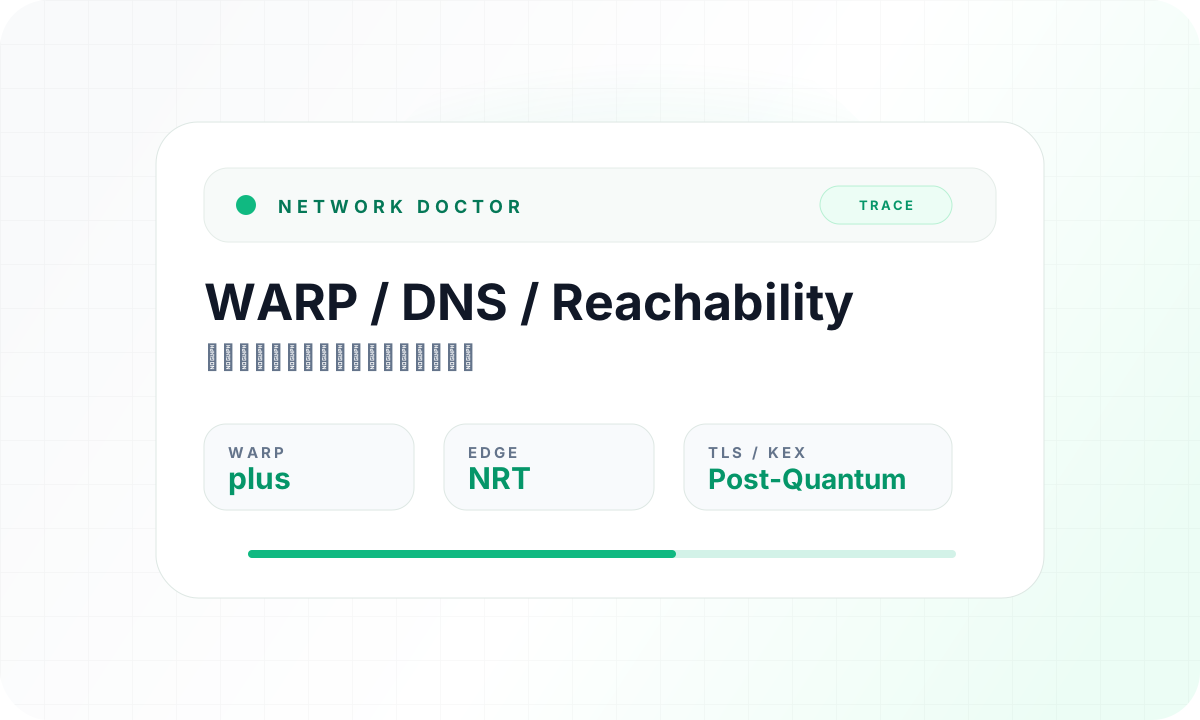
Every Network Metric Needs an Observation Point
Network diagnostics become misleading when browser-side facts, CDN edge facts, and server-side probe results are shown as if they came from the same place.
Upgrading Network Check into Network Doctor: turning speed tests into diagnosis
This upgrade adds Cloudflare Trace status, DNS resolver latency, and diagnosis summaries to explain WARP, Gateway, edge POPs, and slow realtime apps.
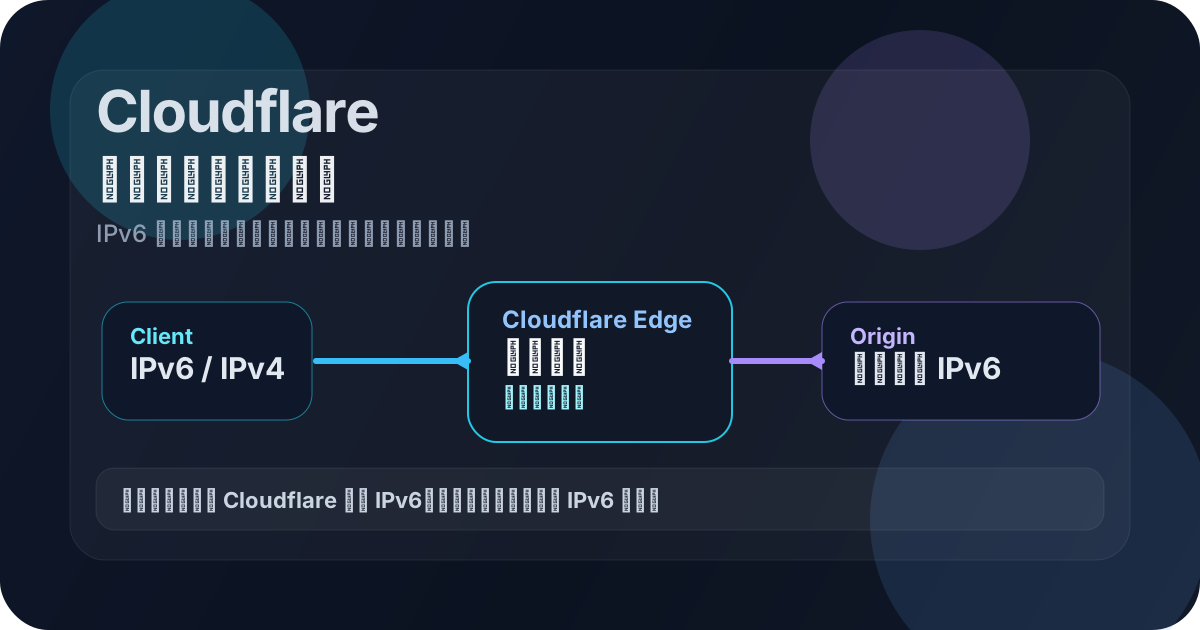
Cloudflare dual-stack access layers: how to judge the IPv6 switch
Separating edge, origin, client, DNS, and troubleshooting layers makes IPv6 decisions much clearer.
IP and DNS modules: turning raw lookup data into readable conclusions
The IP page confirms location and access context, while the DNS page cross-checks multiple resolvers.
Cloudflare to Lightsail
Clarifies the current production path: Cloudflare remains the edge while Wrangler/Worker runtime is retired.
Why We Retired Wrangler Workers but Kept Cloudflare at the Edge
OpsKitPro moved its product runtime to Lightsail standalone Node, but Cloudflare still remains the public DNS, TLS, CDN, and proxy layer in front of the origin.
Service matrix, i18n, and Lightsail deployment: OpsKitPro's engineering wrap-up
Standardize the regular tools into one card system, keep Tools distinct, and deploy the product as a Lightsail standalone Node service.
OpsKitPro Public JSON API v0 Is Live: DNS, IP and HTTP Check APIs
Use OpsKitPro Public JSON API for DNS lookup, IP lookup, and HTTP checks with curl, scripts, and automation workflows.
API and automation
Turns web diagnostics into public interfaces for scripts, CI, and agent workflows.
Public API Error Contracts for Diagnostic Tools
Diagnostic APIs are easier to automate when validation, blocked targets, timeouts, rate limits, and upstream failures use stable machine-readable error shapes.
SSRF Protection for Public Diagnostic APIs
Why public website diagnostic APIs need protocol, redirect, DNS, and IP-range guards before they become popular automation endpoints.
Single-node Rate Limiting Without Redis
How OpsKitPro protects public diagnostic APIs with a pragmatic in-memory limiter before adding Redis, API keys, or paid quotas.
OpsKitPro Public JSON API v0 Is Live: DNS, IP and HTTP Check APIs
Use OpsKitPro Public JSON API for DNS lookup, IP lookup, and HTTP checks with curl, scripts, and automation workflows.
OpsKitPro: Online Website, DNS, IP and Network Diagnostic Tools for Developers
From website status and network connectivity to our Public JSON API, see how OpsKitPro helps you troubleshoot faster.
AI engineering
Turns vibe coding into a guarded workflow with scope, verification, notes, and deployment checks.
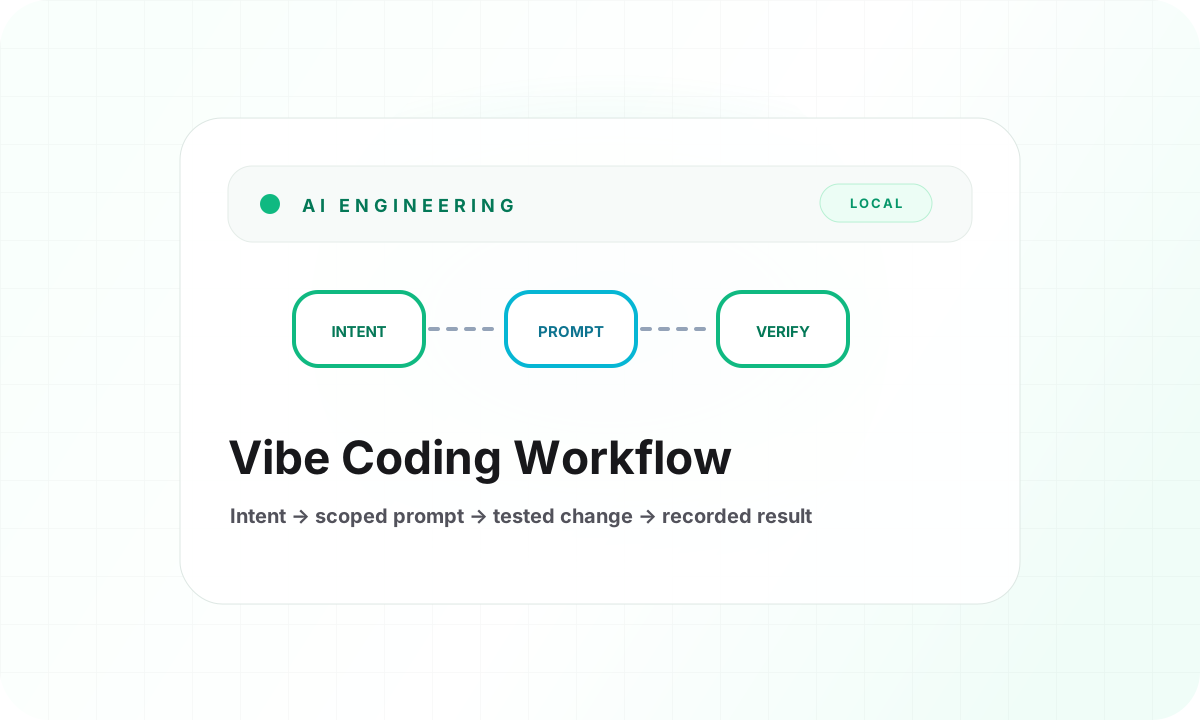
Vibe Coding in practice: turning AI-assisted coding into a verified engineering workflow
From idea to prompt, code, tests, notes, and deployment, the point is not loose automation but clear guardrails.
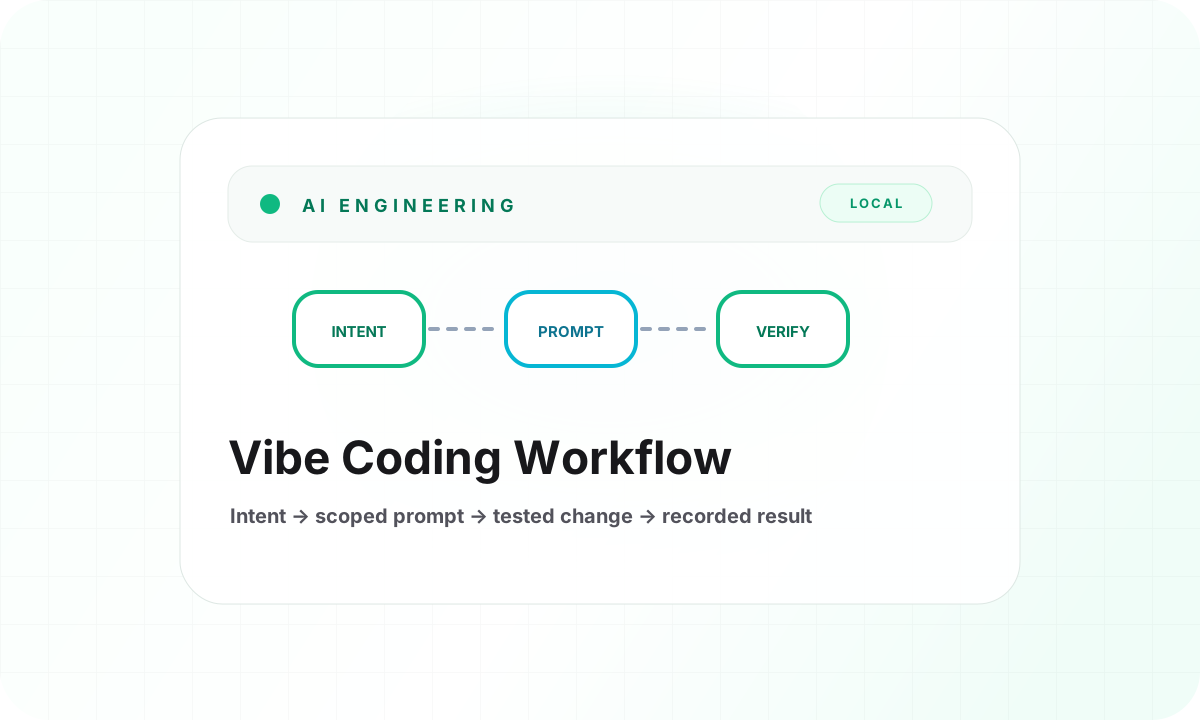
AI Can Write Code Fast. Playwright Tells Me Whether I Can Ship It.
AI accelerates development, but how do you trust what it generates? For OpsKitPro, a robust Playwright smoke matrix is the ultimate release boundary.
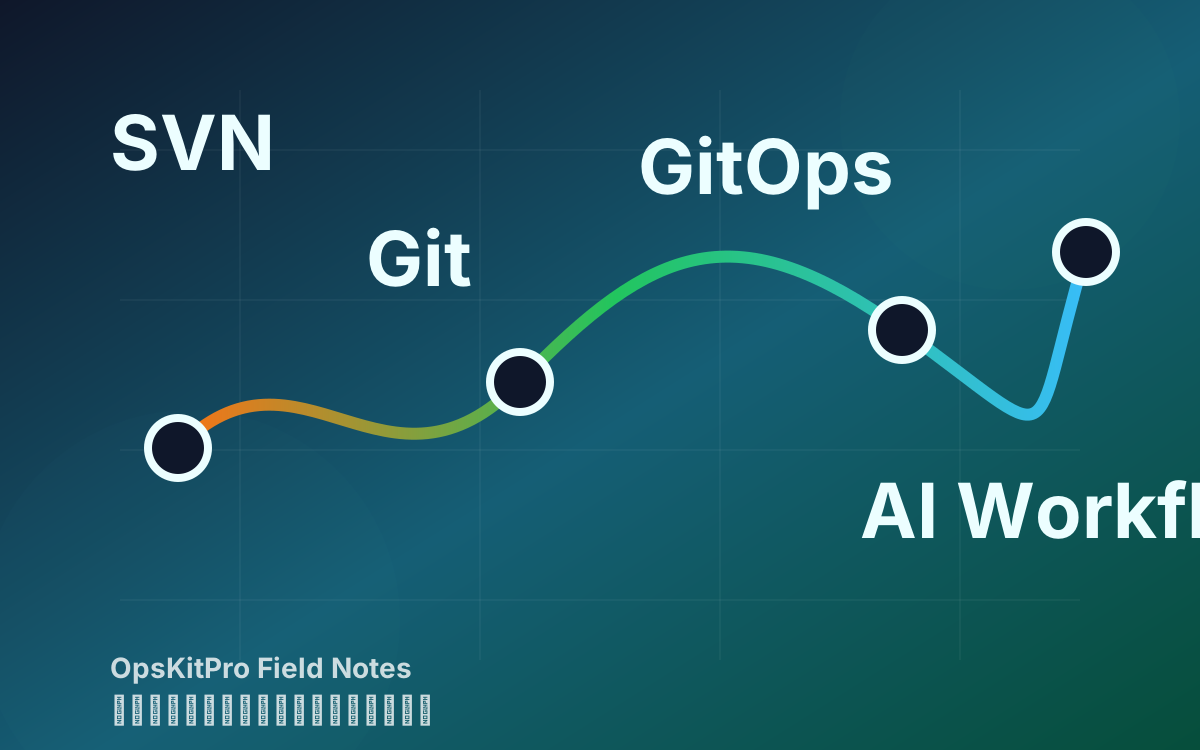
I found my V2EX reply from 8 years ago and realized I underestimated Git
A reflection on SVN, Git, DevOps collaboration, and why OpsKitPro is becoming a cleaned-up operations notebook.
Utility workbenches
High-frequency JSON, WebSocket, password, and QR tools built for fast, predictable use.
How the JSON toolkit works: design, implementation, use, and usage
Validation, repair, formatting, jq, schema, diff, and field extraction all live on one page.
How the WebSocket debugger works: design, implementation, use, and usage
Multi-connection tabs, message templates, binary sending, session saving, and log retrieval for real debugging.
How the password generator works: design, implementation, use, and usage
From secure randomness and mode switching to strength hints, copy actions, and history, the tool stays fast.
How the QR generator works: design, implementation, use, and usage
Type text and instantly preview a QR code, then download it as PNG for links or short text sharing.
Product building
Notes on why OpsKitPro is designed, scoped, and simplified this way.
OpsKitPro design principles: why the UI became more restrained
The UI was tightened from a HUD vibe into a light product surface with unified cards, states, and copy.
Service matrix, i18n, and Lightsail deployment: OpsKitPro's engineering wrap-up
Standardize the regular tools into one card system, keep Tools distinct, and deploy the product as a Lightsail standalone Node service.
Return to Tools
The knowledge base stays public and reusable; daily diagnostics and workflows start from Tools.